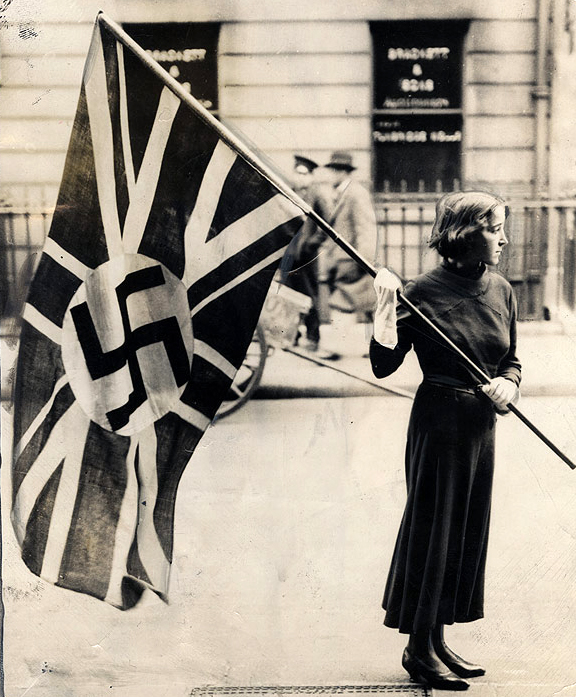
 Not so long ago, the word “fascism” belonged to the history books. It conjured images of Mussolini’s rallies in Rome or stormtroopers marching through Berlin. Today, however, the term is back in public debate—not in reference to distant dictatorships, but in discussions about politics in the United Kingdom and the United States.
In both countries, movements and leaders once seen as fringe have pushed ideas that echo the darkest chapters of the 20th century: nationalism laced with resentment, suspicion of minorities and contempt for democracy. While only a few wear the fascist label openly, the fingerprints of the ideology are visible everywhere. The question is: why here, why now?
One answer lies in the economic landscape. In the U.S.A., the collapse of manufacturing hollowed out once-prosperous towns. In the U.K., post-industrial decline and over a decade of austerity and Conservative mismanagement left public services crumbling. Then came the 2008 financial crash, a turning point that deepened the gap between elites and ordinary people.
Wall Street and London’s financial sector bounced back. Millions of workers did not. Resentment grew. For the far right, this was fertile soil. They offered a story not about abstract economics, but about villains you could see, immigrants, Brussels bureaucrats, or “globalists.”
Donald Trump’s “Make America Great Again” and Nigel Farage’s “Take Back Control” drew from the same playbook, with Farage leeching off the unhinged rantings (and bank account?) of Trump. Each slogan implied that someone had stolen something vital—and that only a nationalist resurgence could restore it.
But economics isn’t the whole story. At least as powerful has been cultural anxiety. Both the UK and America have become more diverse, more cosmopolitan, and more progressive on issues of race, gender, and sexuality. For many, this is a mark of progress. For others, it feels like dislocation and a threat to their very existence.
The U.K.’s Brexit campaign tapped into fears about immigration, with posters showing long lines of refugees under the words “Breaking Point.” In the U.S.A., Trump launched his presidential bid by branding Mexican immigrants as criminals and later imposed a “Muslim ban.” These weren’t fringe statements—they were central to mainstream campaigns.
Demographic projections fuel the panic. America is on track to become a “majority-minority” nation within a generation. In the UK, immigration has reshaped cities and towns. Far-right movements frame these changes not as natural evolution, but as existential threats.
The internet has turbocharged the spread of authoritarian ideas. Where fascist movements of the past relied on party newspapers and rallies, today’s extremists have memes, YouTube channels, and encrypted chat rooms. X (formerly Twitter) has particularly become a mouthpiece not only for its right-wing owner Elon Musk, but also for what at first glance appears to be an army of similar thinking neo fascists.
Online communities like 4chan and Telegram have incubated far-right cultures that blur irony with ideology. What begins as a joke about “global elites” or “great replacement” theory can harden into violent conviction. In the U.S.A, the Pittsburgh synagogue shooter and the El Paso gunman cited online conspiracy theories in their manifestos. In the U.K., the man who murdered MP Jo Cox in 2016 shouted “Britain first!” as he attacked her.
Social media companies have promised reforms, but their algorithms still prioritize outrage—rewarding incendiary content, whether it’s racist diatribes or conspiracies about stolen elections. Call it what it is, blatant lies. Far too much of it being broadcast printed and added to social media across all the major outlets, and yet people take it as gospel. We must have the thickest generation since World War 2. There has been an engineered decline of intelligence and education to allow growing control by our ‘leaders’
Lack of depth in anything, a disposable society where nothing appears to have lasting importance, and everybody’s concept of reality changes on a day to day basis.
Fascism doesn’t always storm the gates; sometimes it sidles in wearing the suit of populism. In the U.S.A., Trump’s rise to the presidency was built on portraying himself as the only voice for the “real America.” He branded journalists “enemies of the people,” demanded loyalty from officials, and flirted with authoritarian leaders abroad. If you don’t think Trump will try his hardest to suspend the 2028 elections by declaring Martial Law, you’re being naive. The road to fascism is paved with cowardice. In 1934, Germany passed a law making it a crime to tell jokes or laugh at its leaders.
We can’t go down that road. Because what’s next is you can’t post what you want on social media. And you can’t text your friends anything that might upset the government.
In the UK, the style has been subtler. Boris Johnson, for instance, was no fascist, but his government’s willingness to sideline Parliament during Brexit negotiations and to attack judges as “enemies of the people” showed a creeping disdain for democratic norms. Meanwhile, figures like Farage kept alive the narrative of betrayal by elites and invasion by outsiders.
The result is polarization so deep that compromise becomes impossible—and that’s when authoritarian solutions start to look attractive. That’s not the way it should be. The people shouldn’t be afraid of their government. The government should be afraid of the people!
The storming of the U.S. Capitol on January 6th, 2021, was the clearest signal yet of how fragile democracy can be. A sitting president encouraged a mob to reject election results. For many historians, the images of rioters carrying Confederate flags through the halls of Congress felt less like an isolated event than a glimpse of where authoritarian rhetoric can lead.
In the UK, the institutions have, so far, held strong, but warning signs remain. Government moves to restrict protests, threats to judicial independence, and hostile rhetoric toward migrants all fit into a pattern. None amounts to fascism alone, but together they shift the boundaries of what is acceptable.
At its core, fascism thrives on fear and belonging. It tells people who feel ignored or disrespected that they are the true nation, that their suffering has been caused by outsiders, and that only by uniting under a powerful leader can they reclaim what’s theirs.
It is this emotional power—not policy specifics—that explains its endurance. Jobs programs or welfare reform might ease material hardship, but they cannot compete with the promise of restored ‘greatness’.
The good news is that resistance is strong. Mass movements in both countries have pushed back against authoritarian drift. From Black Lives Matter protests in the U.S. to anti-racism campaigns in Britain, millions are mobilizing in defence of democratic values.
But the struggle is far from over. Fascism feeds on crisis—economic crashes, migration surges, pandemics. Each shock provides an opportunity for opportunists to stoke fear and division. Unless democracies address inequality, rebuild trust in institutions, and create a more inclusive sense of national identity, the siren song of authoritarianism will continue to play.
Fascism rarely announces itself. It creeps, it rebrands, it adapts to modern culture. That’s why it’s so dangerous. In both the U.K. and U.S.A., we’re not witnessing a carbon copy of the 1930s—but we are seeing familiar patterns.
The lesson from history is clear: fascism grows when democracy fails to deliver. The task for the UK and America today is not just to denounce the extremists, but to build societies where fear and resentment cannot take root so easily.
Because once fascism takes hold, as history shows, it is far harder to dislodge. So how do we defeat it? The question is no longer whether it exists, but how democracies can fight back.
Step one is to name it. Too often, politicians and pundits shy away from the “F-word,” preferring euphemisms like “populism” or “illiberalism.” But fascism, at its core, is about undermining democracy in the name of a purified nation. Denying its presence only emboldens those who traffic in it.
Strong institutions are the first line of defence. In the U.S.A., courts, state officials, and election workers held firm against efforts to overturn the 2020 election. In the U.K., the judiciary has resisted executive overreach. But institutions alone can’t save democracy—they require political leaders who respect the rules even when it costs them power. Strengthening safeguards, from independent courts to robust electoral oversight, is essential.
Fascism thrives on despair. Towns stripped of industry, young people priced out of housing, families left behind by globalization—all provide fertile ground for scapegoating. If mainstream parties fail to address inequality, extremists will. Investments in jobs, healthcare, and education aren’t just policy choices; they are bulwarks against authoritarianism.
Fascist movements sell a story of decline and betrayal: that “real” citizens are being displaced by immigrants, minorities, or foreign powers. Countering this means telling a different story—one of inclusion, resilience, and shared national purpose. Civic leaders, schools, and media all have a role to play in showing that diversity is strength, not a threat.
The internet has become fascism’s amplifier. Social media platforms still reward outrage and conspiracy over facts. Governments must push tech companies to enforce transparency and curb extremism, without sliding into censorship. At the same time, citizens need media literacy to spot disinformation and resist manipulation. At this moment in time, both are failing miserably.
Fascism is not defeated by silence. Grassroots activism, from anti-racism campaigns in the U.K. to voter mobilization efforts in the U.S.A., has already blunted extremist advances. Trade unions, community groups, and local organizations can provide the sense of belonging that far-right movements exploit.
History’s warning is clear: fascism rarely takes power overnight. It advances step by step, normalising authoritarian instincts until democracy collapses under its weight. The U.K. and America are not there yet—but the danger is real.
Defeating fascism is not about nostalgia for a lost golden age, but about building societies where people feel secure, represented, and hopeful. That requires courage from leaders, resilience from institutions, and vigilance from citizens.
Because democracy doesn’t just defend itself. It must be defended—every day, by all of us.